How the Allotment Lottery Works
For retail investors (applications up to ₹2 lakh), SEBI mandates a computerised lottery when an IPO is oversubscribed. The key rule: each valid application gets exactly one ticket in the lottery, regardless of lot size. This means applying for 13 lots doesn't give you 13 chances — it gives you exactly one chance, same as someone applying for 1 lot.
Strategy 1: Apply from Multiple Family Accounts
Since each account gets one lottery ticket, the most effective strategy is applying from as many family members' Demat accounts as possible. Parents, siblings, spouse — each valid PAN with a linked Demat gets one entry. This is completely legal under SEBI rules as long as:
- Each application uses a different PAN
- Each application uses a separate bank account (for UPI/ASBA mandate)
- Applications are not duplicate (same PAN applied twice = rejection of both)
Strategy 2: Always Apply for Exactly 1 Lot
Since more lots don't improve your odds, applying for 1 lot (minimum) conserves your capital. This lets you spread the same capital across more IPOs or family accounts, maximising total lottery entries rather than wasting capital on extra lots that don't improve allotment probability.
Exception: In HNI/NII category (applications above ₹2 lakh), allotment is proportional — so size does matter there.
Strategy 3: Use Cutoff Price Option
Always tick "Apply at Cutoff Price" instead of bidding at the floor price. Bidding below the final cut-off price results in automatic rejection. Bidding at cut-off means you accept whatever price SEBI finalises within the price band — this ensures your bid is never rejected on price grounds.
Strategy 4: Submit Applications Early
While allotment is random, early application ensures your bid is processed correctly and avoids last-minute technical issues (UPI mandate failures, server load on closing day). Aim to apply on Day 1 or Day 2 of the IPO window.
Strategy 5: Approve the UPI Mandate Immediately
For UPI-ASBA applications: approve the mandate request in your UPI app within minutes of applying. Do not wait. The mandate expires at 5 PM on the closing day — if you forget, your application is rejected regardless of the subscription level.
Strategy 6: Track Subscription Data on Ipogo.in
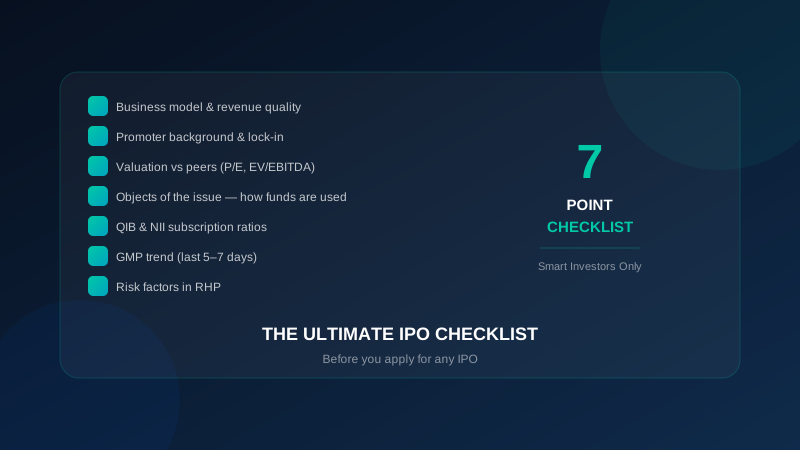
Monitor live subscription ratios, especially for the QIB category. High QIB subscription (20x+) is a strong signal of institutional conviction and often predicts a strong listing. Conversely, weak QIB subscription is a red flag even if GMP is high.
Strategy 7: Be Selective — Don't Apply to Every IPO
The most overlooked strategy. Your capital and attention are finite. Research each IPO's fundamentals, compare with peers, and apply only to IPOs where the risk/reward is genuinely compelling. Quality over quantity — especially in volatile markets.
Quick Reference: What Gets Your Application Rejected?
- ❌ Duplicate PAN applications
- ❌ Bid price below the cut-off price
- ❌ UPI mandate not approved before 5 PM closing deadline
- ❌ Insufficient funds in the bank account at mandate block time
- ❌ PAN not linked with Demat / KYC not complete