What is an IPO?
An Initial Public Offering (IPO) is when a privately held company offers its shares to the general public for the first time on a recognised stock exchange like BSE or NSE. It is the moment a company transitions from being private to being publicly listed. IPOs allow companies to raise fresh capital for expansion, debt repayment, or working capital, while giving early investors and promoters an exit opportunity.
In India, every IPO is regulated by SEBI (Securities and Exchange Board of India) and must comply with strict disclosure norms outlined in the SEBI ICDR (Issue of Capital and Disclosure Requirements) Regulations, 2018.
Why Do Companies Launch IPOs?
- Raise capital for growth, R&D, or debt repayment
- Provide an exit to early investors (VCs, angel investors, promoters)
- Enhance brand visibility and public credibility
- Enable ESOP liquidity for employees holding stock options
Key Documents: The Red Herring Prospectus (RHP)
Before investing, always read the Red Herring Prospectus (RHP) — the official document filed with SEBI. It contains:
- Business description & competitive landscape
- Financial statements (3 years audited)
- Objects of the issue (how funds will be used)
- Risk factors
- Promoter background & litigation history
The RHP is available on the company's website, the BSE/NSE website, and SEBI's EDGAR system. Never invest in an IPO without reading at least the risk factors section.
Categories of Investors
SEBI divides IPO applicants into three categories, each with reserved quota:
- Retail Individual Investors (RII) — Applications up to ₹2 lakh. 35% of issue reserved.
- Non-Institutional Investors (NII / HNI) — Applications above ₹2 lakh. 15% reserved.
- Qualified Institutional Buyers (QIB) — Mutual funds, FPIs, banks. 50% reserved.
How to Apply for an IPO in 2026
Step 1: Open a Demat & Trading Account
You need a Demat account with a registered depository participant (DP) such as Zerodha, Groww, Angel One, ICICI Securities, or HDFC Securities. Your PAN must be linked.
Step 2: Use ASBA via UPI or Net Banking
All IPO applications use the ASBA (Application Supported by Blocked Amount) mechanism. Your application amount is blocked — not debited — in your bank account until allotment. You can apply via:
- Your broker's app or website
- Your bank's net banking IPO section (directly)
- UPI-linked ASBA for amounts up to ₹5 lakh
Step 3: Approve the UPI Mandate
If applying via UPI, open your UPI app (GPay, PhonePe, BHIM) and approve the mandate block request before 5 PM on the closing day. Failure to approve = automatic rejection.
How Allotment Works
If an IPO is oversubscribed (more demand than available shares), SEBI mandates a computerised lottery for retail investors. Each valid application — regardless of the number of lots applied for — gets a single entry in the lottery. This means applying for 1 lot or 13 lots gives you the same probability of allotment.
For this reason, many seasoned investors apply from multiple family member accounts to improve aggregate allotment chances (legally).
Listing Day Strategy
Your options on listing day:
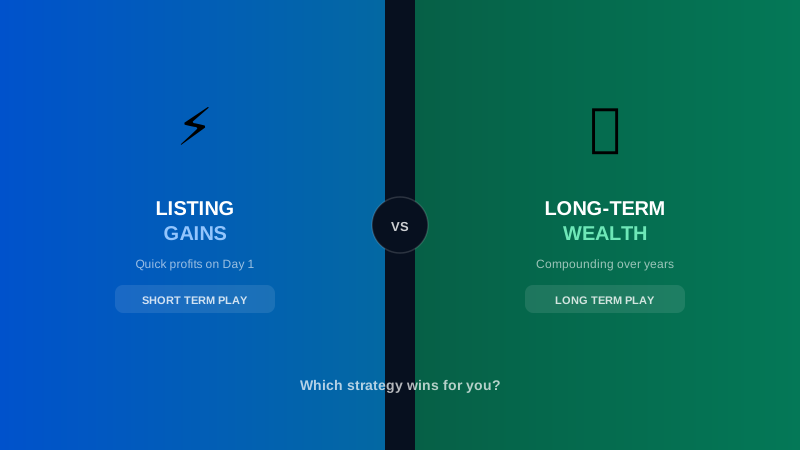
- Sell immediately at open if GMP was accurate and you want to book quick gains
- Hold for the long term if you believe in the company's fundamentals
- Apply a trailing stop-loss to protect against sharp post-listing declines
Final Checklist Before Applying
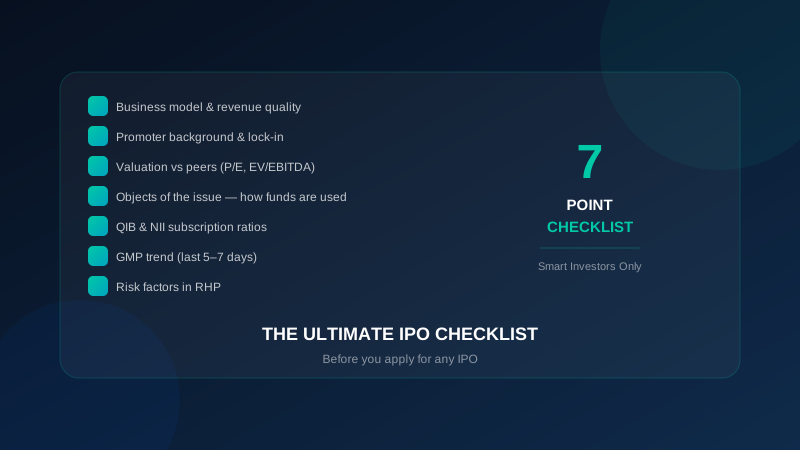
- ✅ Read the RHP risk factors
- ✅ Check GMP trend on Ipogo.in (last 5–7 days)
- ✅ Verify subscription data (oversubscription category-wise)
- ✅ Ensure funds are available and UPI mandate is approved
- ✅ Apply from multiple family accounts if possible
Happy investing! Track every live IPO with real-time GMP on Ipogo.in.